



Overview
Legionella testing is carried out to detect the presence of Legionella species in water systems. These bacteria occur naturally in freshwater but can multiply in man-made systems such as hot and cold water networks, storage tanks, cooling towers, and spa pools.
Of particular concern is Legionella pneumophila, which is associated with Legionnaires’ disease, a form of pneumonia transmitted through inhalation of contaminated aerosolised water droplets.
Legionella can proliferate in stagnant water, within biofilms, and at temperatures between 20°C and 45°C. Testing involves the collection of water samples followed by laboratory culture to detect and quantify viable organisms.
Results support risk assessment, system monitoring, and water safety management.

Sample preparation and filtration
Water samples are processed using a membrane filtration method to concentrate any Legionella organisms present.
The process involves:
-
Filtering a measured volume of water through a sterile membrane
-
Capturing bacteria on the surface of the membrane
-
Applying treatment steps to reduce background flora
Following filtration, the membrane may be subjected to:
-
Acid treatment to suppress competing microorganisms
-
Controlled preparation prior to plating
These steps improve the selective recovery of Legionella species where present and reduce interference from non target environmental organisms.

Selective culture
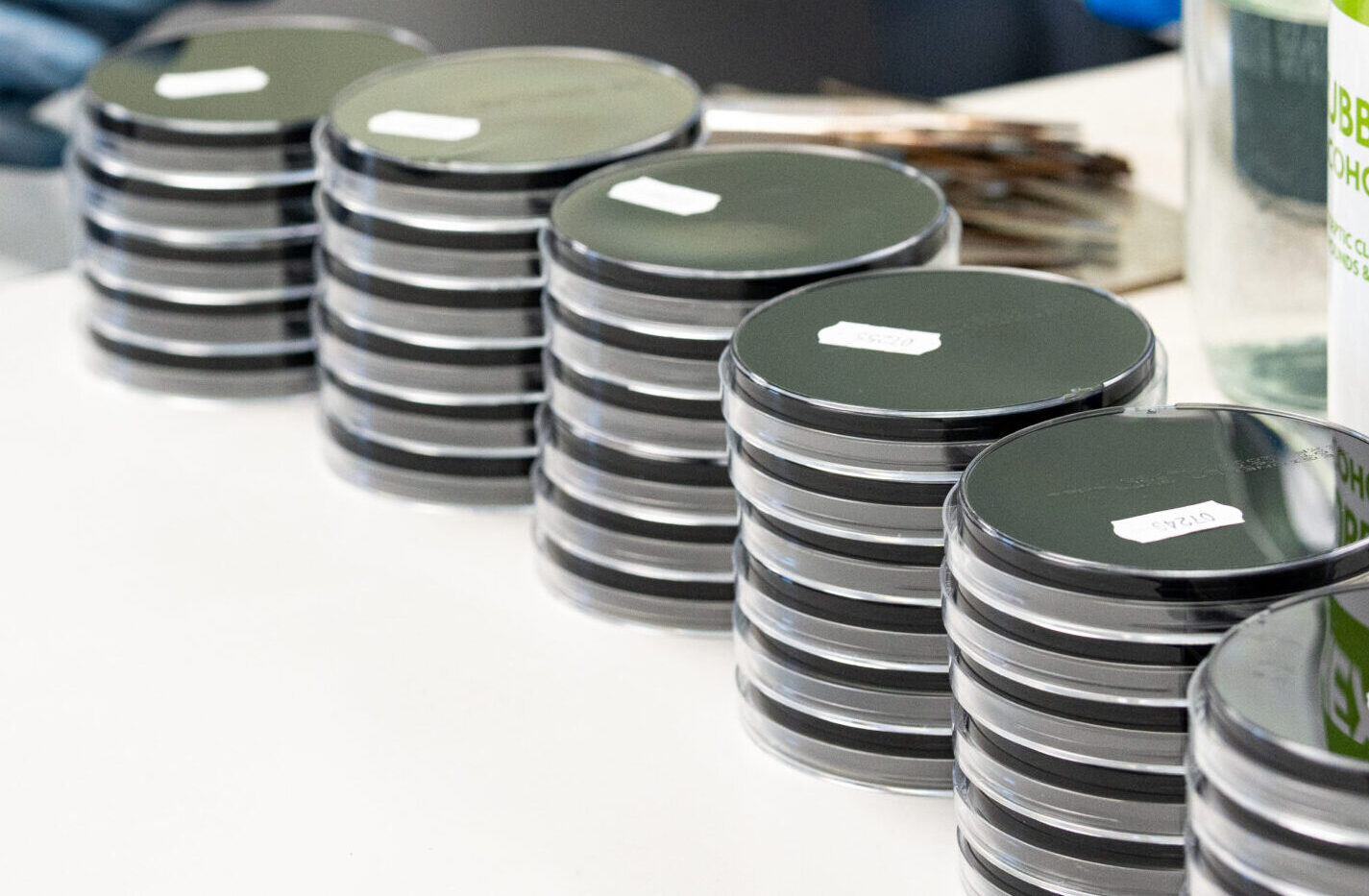
Prepared membranes are plated onto GVPC agar, a selective medium formulated to support the growth of Legionella species while inhibiting competing flora.
GVPC agar contains selective agents that:
-
Suppress Gram-positive and many Gram-negative non-target organisms
-
Promote selective recovery of Legionella
Plates are incubated under controlled temperature and humidity conditions for an extended period, as Legionella are relatively slow-growing organisms.
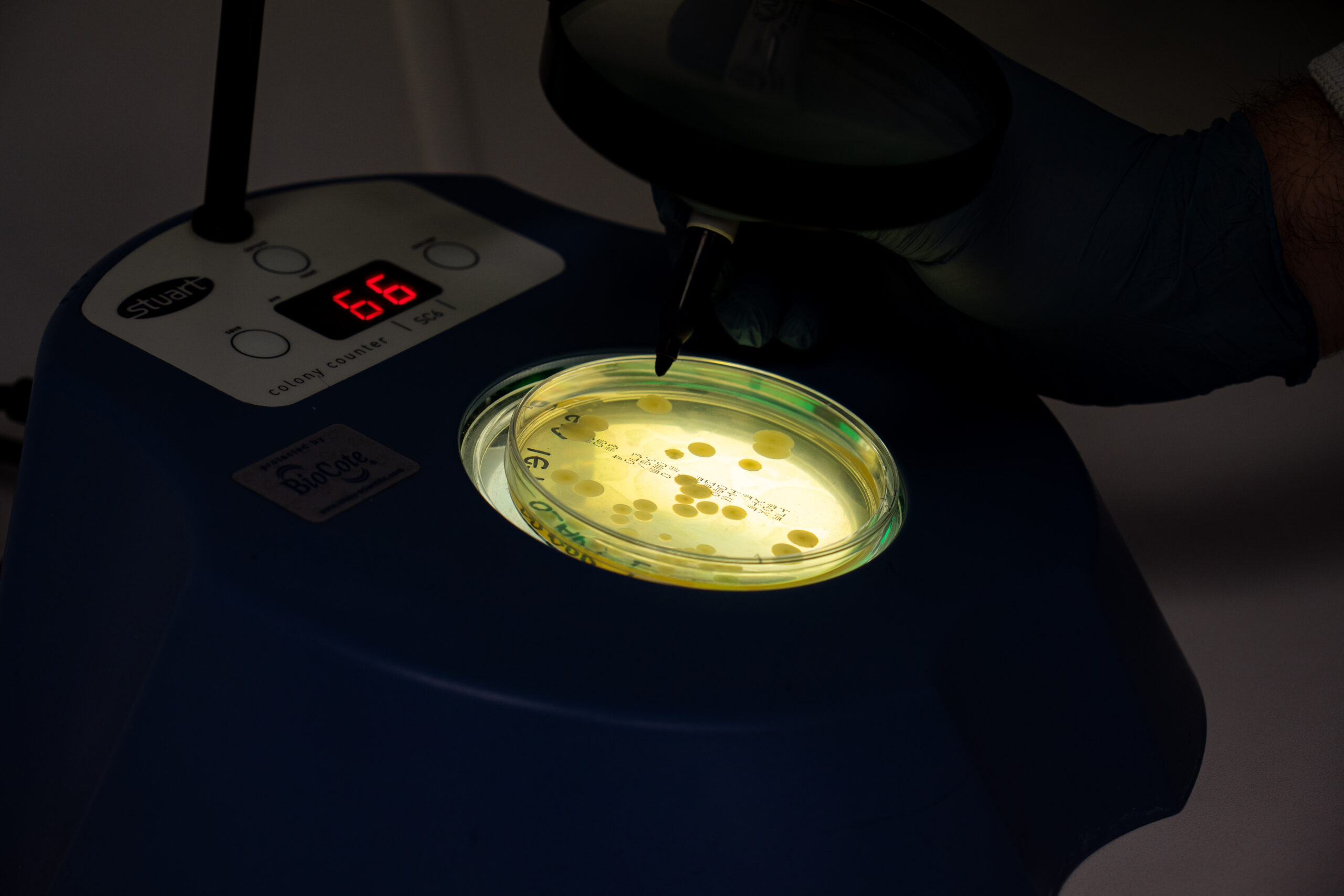
Following incubation, plates are examined for:
-
Characteristic colony morphology
-
Typical growth patterns associated with Legionella species
Confirmation testing
Where presumptive Legionella colonies are observed, confirmation testing is performed to verify identity.
This commonly involves subculture onto media:
-
Containing cysteine
-
Lacking cysteine
Legionella species require cysteine for growth. The organism will grow on cysteine-supplemented media but not on cysteine-free media.
This differential growth pattern:
-
Confirms genus-level identification
-
Distinguishes Legionella from other environmental bacteria
Serogroup identification
Where Legionella is confirmed, further testing may be performed to determine the specific serogroup present.
This is typically carried out using:
-
Latex agglutination assays
-
Serological identification methods
Serogroup identification:
-
Differentiates Legionella pneumophila from other species
-
Identifies specific serogroups, such as serogroup 1
-
Supports assessment of potential public health significance
Interpretation and reporting
Results are reviewed and reported to indicate the presence or absence of Legionella species and, where applicable, the identified serogroup.
Reports may include:
-
Colony counts expressed as CFU per litre
-
Sampling location
-
Relevant contextual information
Testing supports:
-
Risk assessment and water safety management
-
Investigation of suspected contamination
-
Ongoing monitoring of system control
Clear interpretation and structured reporting are essential to support informed decision-making and compliance with health and safety guidance.
You may also be interested in
Discover additional specialist services designed to strengthen your compliance framework and support safe, efficient clinical operations.