



Overview
Peracetic acid (PAA) is a strong disinfectant widely used i healthcare environments, particularly in endosocpe reprocessing. It is effective against a broad range of microorganisms, including bacteria, viruses and spores, making it suitable for high-level disinfection processes.
PAA is commonly used within washer disinfectors, where it plays a key role in ensuring tat medical devices are cleaned and disinfected to the required standards.
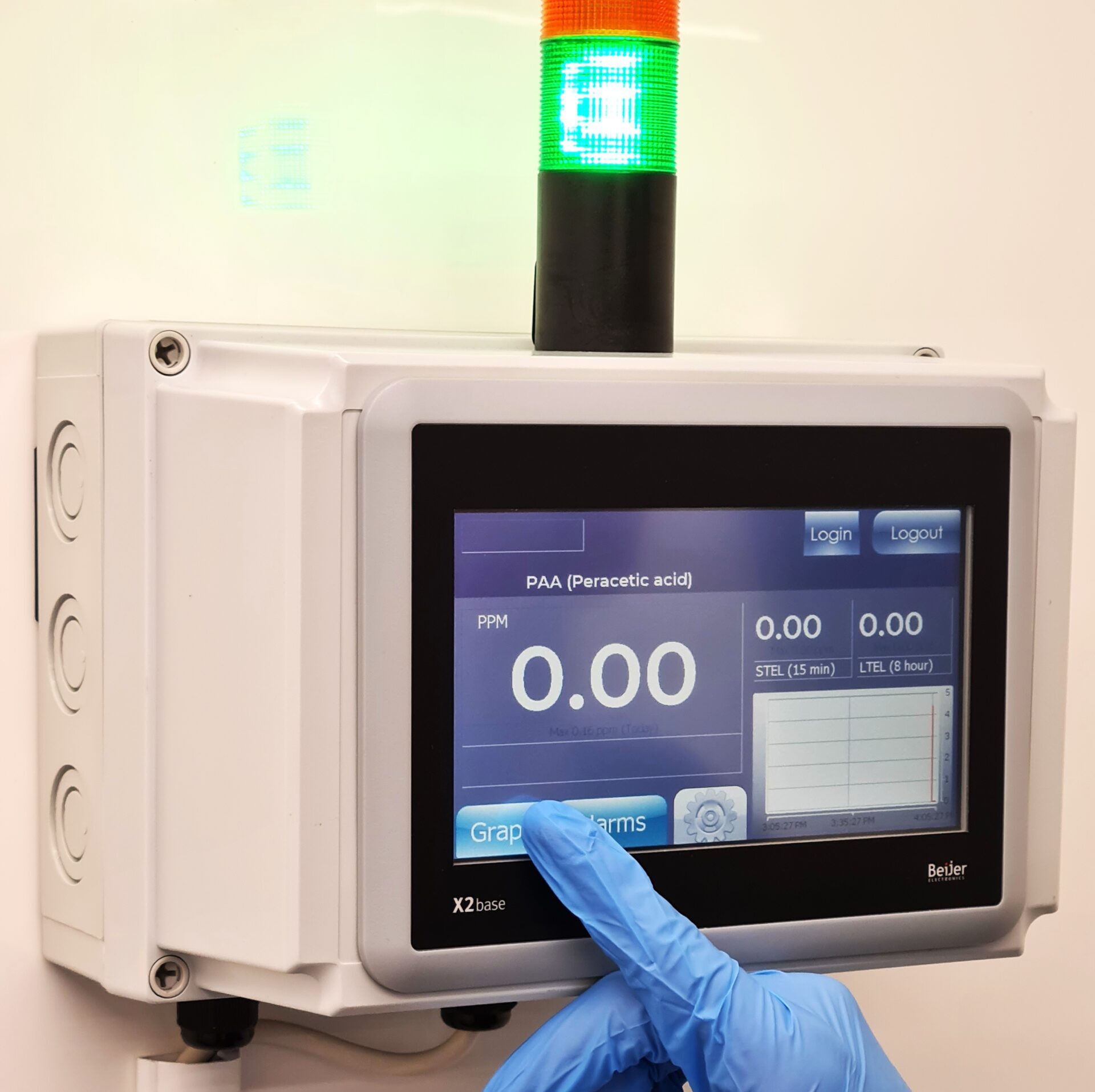
How does PAA work?
Peracetic acid works by breaking down the cell walls of microorganisms and disrupting their internal structures. This process prevents microorganisms from surviving or reproducing, allowing for effective disinfection.
After use, PAA breaks down into by-products, which are acetic acid, oxygen and water. However, during operation, it can release vapours into the surrounding environments.

Why is PAA monitoring important?
Although PAA is highly effective as a disinfectant, exposure to its vapours can present risks if not properly controlled.
Monitoring helps to:
- Measure vapour levels during normal operation
- Ensure exposure remains within safe limits
- Identify issues with ventilation or equipment
- Highlight unsafe handling or storage practices
By monitoring PAA levels, departments can maintain safe working environments and ensure compliance with health and safety requirements.
Potential risk of PAA exposure
Exposure to elevated levels of peracetic acid vapour may cause:
- Irritation to the eyes, skin and respiratory system
- Breathing discomfort or coughing
- Headaches or dizziness in poorly ventilated areas
These risks are typically associated with prolonged or elevated exposure, which is why monitoring and control measures are important.

What can cause elevated PAA levels?
Higher than expected PAA levels can be caused by:
- Poor ventilation or extraction systems
- Equipment faults or washer disinfector performance issues
- Improper storage or handling of PAA chemicals
- Spillage or incorrect use of disinfectant solutions
Monitoring helps identify these causes early so that corrective action can be taken.

PAA and workplace safety
Under the Control of Substances Hazardous to Health (COSHH) Regulations, employers are required to assess and control exposure to hazardous substances such as PAA.
Monitoring forms an important part of this process by providing measurable data that supports:
- Risk assessments
- Safe working procedures
- Ongoing environmental monitoring
- Audit and compliance requirements
You may also be interested in
Discover additional specialist services designed to strengthen your compliance framework and support safe, efficient clinical operations.