



Overview
Surrogate devices are used during the validation and verification of endoscope washer disinfectors (EWDs) and drying cabinets.
They support conformity testing in line with recognised standards for endoscope processing, including ISO 15883-4.
They are designed to simulate the internal channels and structural complexity of flexible endoscopes, allowing performance testing under controlled and measurable conditions.
Within the context of HTM 01-06, surrogate devices support the validation of cleaning, disinfection, and drying processes by providing a reproducible test system that can be microbiologically assessed.
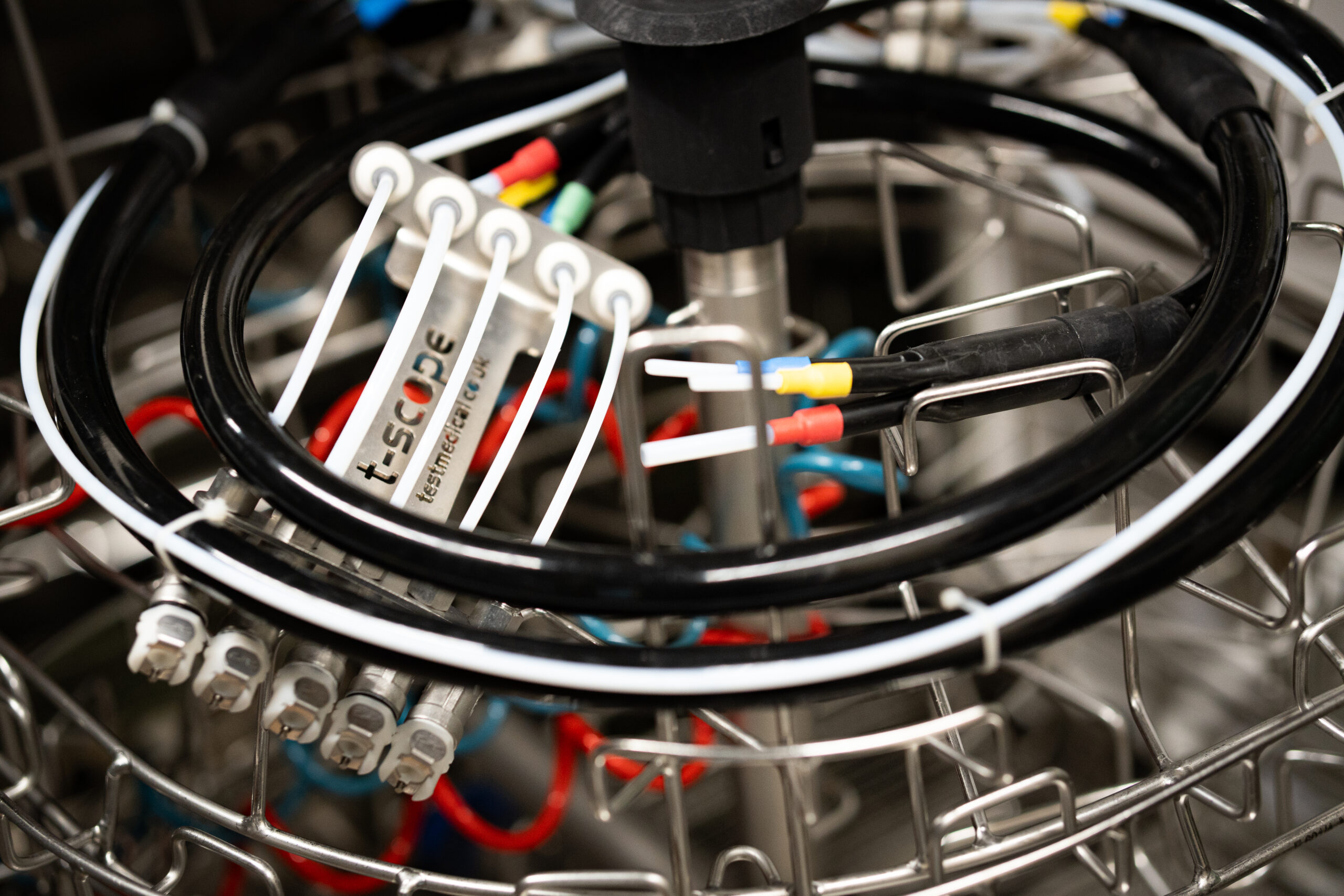
What is a Surrogate Device?
A surrogate device is a purpose-built test piece that replicates key characteristics of flexible endoscopes, including:
-
Narrow internal channels
-
Lumen length and diameter
-
Connector interfaces
-
Multiple channel configurations
Unlike clinical endoscopes, surrogate devices are constructed specifically for validation testing and can be intentionally inoculated with defined microorganisms. This enables the controlled assessment of the washer-disinfectors’ performance.
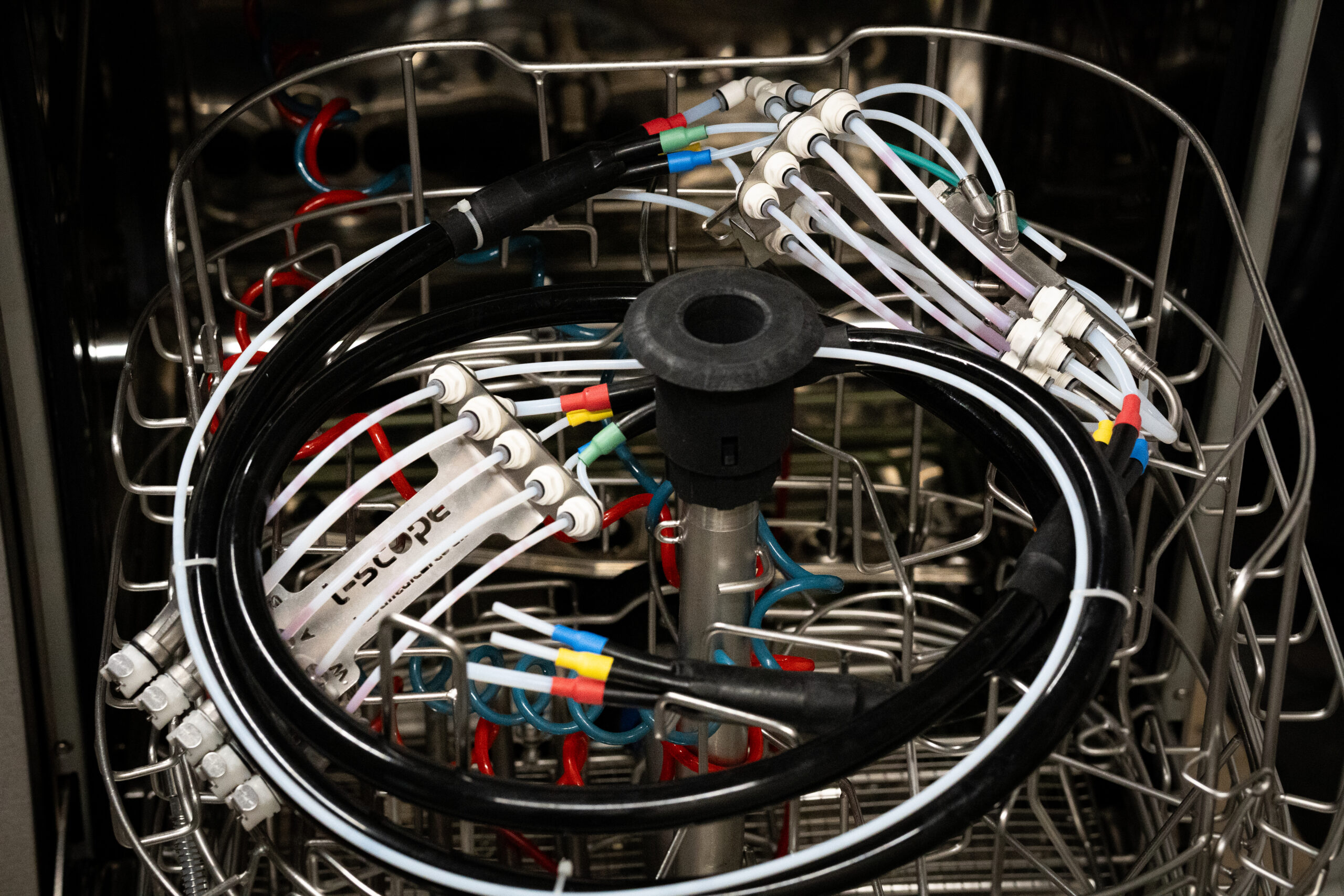
Why Surrogate Devices Are Used?
Flexible endoscopes contain long, narrow lumens and intricate internal structures that are difficult to assess visually. Routine washer disinfector cycles may appear satisfactory, but without validation testing, inadequate cleaning or disinfection performance may go undetected.
Surrogate devices allow:
-
Objective microbiological challenge testing
-
Verification of cleaning and disinfection efficacy
-
Assessment of complex channel processing
-
Standardised and repeatable validation procedures
By simulating worst-case conditions, surrogate devices provide measurable evidence that reprocessing systems are functioning as intended.

Role in HTM 01-06 Validation
HTM 01-06 outlines the need for validation, periodic testing, and performance verification of endoscope washer disinfectors. Surrogate devices are used as part of:
-
Installation Qualification (IQ)
-
Operational Qualification (OQ)
-
Performance Qualification (PQ)
-
Periodic revalidation
They help demonstrate that the washer-disinfectant can consistently achieve the required microbiological reduction across all channels.
Testing typically involves loading surrogate devices with defined bacterial species, running a standard decontamination cycle, and subsequently enumerating any surviving organisms in a laboratory setting.

Microbiological Assessment
Surrogate device validation involves:
- Controlled inoculation with specified microorganisms
- Placement within the disinfector
- Completion of a full cleaning and disinfection cycle
- Laboratory enumeration of any remaining viable bacteria
Results are reported as colony forming units (CFU), allowing quantitative assessment of decontamination efficacy.
This structured approach provides objective data rather than relying solely on cycle parameters or visual inspection.
T-scope Surrogate Device Applications
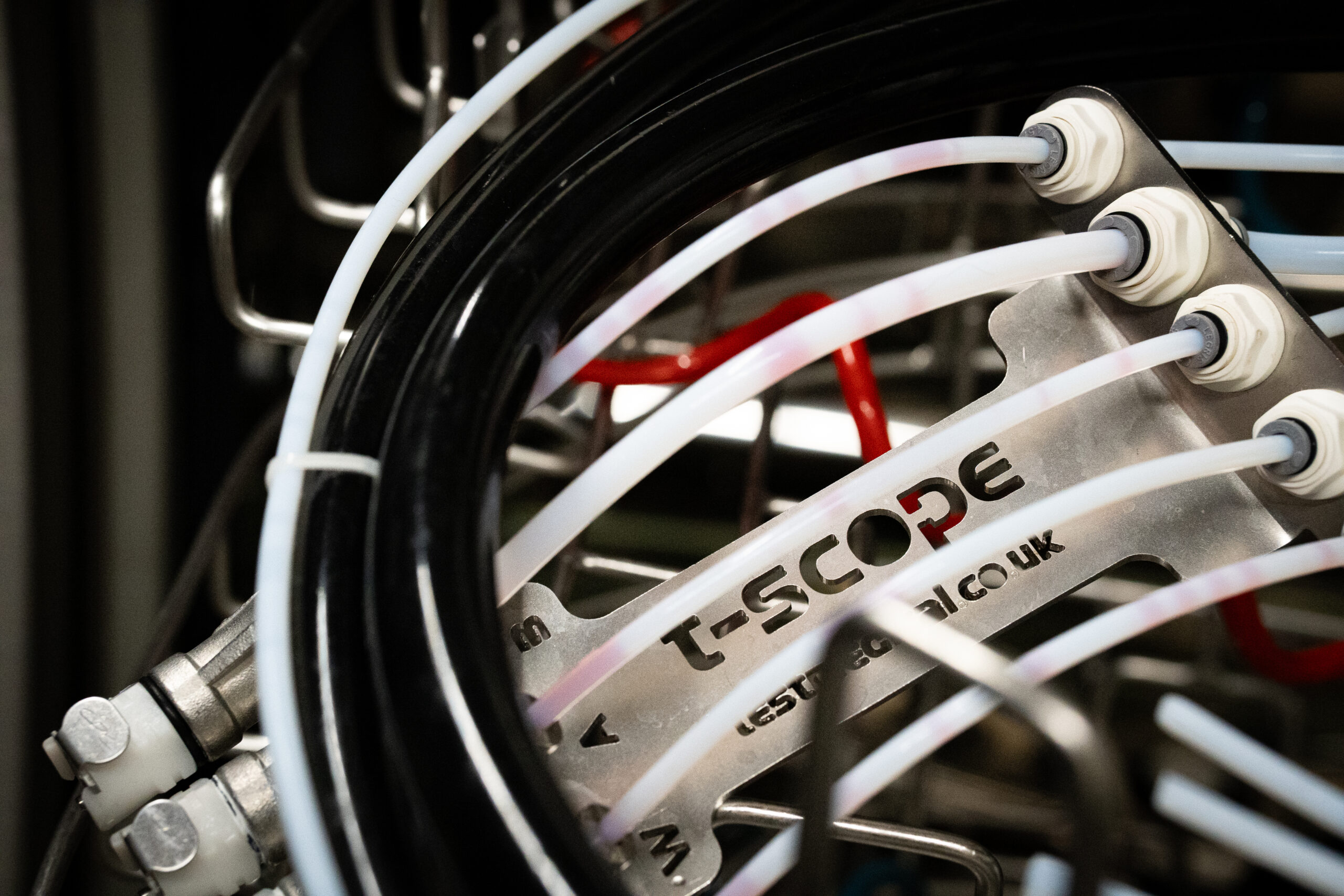
The T-scope is a configurable surrogate device used to simulate the internal channel structure of flexible endoscopes during validation testing.
It is built using defined lengths and diameters of PTFE tubing to replicate the flow characteristics found within real endoscope channels. PTFE is used because it is chemically resistant, durable, and provides a smoth internal surface that allows consistent and repeatable testing.
By adjusting:
Tubing length
Internal diameter
Channel configuration
The T-scope can represent different endoscope channel types and simulate more challenging flow conditions.
This makes it possible to test washer disinfectors under controlled and reproducible conditions rather than relying on clinical devices, which vary in design and wear.

Cleaning Efficacy Testing
During cleaning validation, the T-scope is used to assess whether detergent and mechanical flushing reach all parts of a simulated channel.
The device allows:
- Introduction of defined test soil into the lumen
- Controlled irrigation during a washer disinfector cycle
- Assessment of soil removal after processing
Because the tubing dimensions are fixed and known, the cleaning performance can be measured consistently across repeated tests.
This helps confirm that:
- Detergent reaches distal sections of the channel
- Flow is sufficient to remove debris
- No areas remain inadequately flushed
Using a surrogate device removes the variability that comes with testing clinical endoscopes.

Disinfection Efficacy Testing
The T-scope can also be used to assess chemical disinfection performance.
For this type of testing:
- The channel may be innoculated with defined microorganisms
- The washer disinfector cycle is completed as normal
- Any surviving organisms are recovered and counted in the laboratory
This provides measurable evidence of microbial reduction within a simulated channel, rather than just within the washer chamber.
Because the channel dimensions are controlled, the test confirms that disinfectant solution reaches and remains in contact with internal surfaces for an effective period.

Channels Non-Connection Testing
The T-scope can be configured with multiple channels to assess whether all lumens are properly connected and irrigated during a cycle.
This testing helps identify:
- Incorrect or incomplete connections
- Failure of fluid to pass through a channel
- Inadequate irrigation of complex pathways
If a channel is not properly connected, it may not receive detergent or disinfectant, even though the washer cycle completes normally.
Using a surrogate device allows this to be tested in a controlled way, ensuring that irrigation systems function correctly before clinical devices are processed.
Drying Cabinet Surrogate Devices
Drying cabinets form part of the reprocessing pathway. Inadequate drying can allow residual moisture to support microbial survival or biofilm formation.
Drying cabinet surrogate devices are constructed in accordance with EN ISO 15883-4:2018 and are used to:
-
Assess airflow distribution
-
Confirm effective moisture removal
-
Verify compliance with drying performance standards
These devices help demonstrate that stored endoscopes remain dry and suitable for safe use.

Biofilm Considerations
Surrogate device testing also supports early identification of conditions that may promote biofilm formation. Biofilms can develop within washer disinfectors, pipework, or endoscope channels if cleaning performance is suboptimal.
Because bacteria within biofilms are more resistant to disinfectants, validation testing plays an important role in preventing persistent contamination and ensuring long-term system integrity.
Supporting a Robust Validation Framework
Surrogate devices form part of a broader validation strategy that includes:
-
Microbiological water testing
-
Routine washer disinfector monitoring
-
Environmental sampling where required
-
Periodic review of decontamination processes
Together, these measures provide documented evidence that endoscopy reprocessing systems operate safely, consistently, and in line with recognised guidance.
Channel blocks and Surrogate Device Configuration
Flexible endoscope contain channels with different lengths and internal diameters. To standardise validation testing, these channel configurations are grouped into defined blocks.
The T-scope can be configured to represent these channel blocks by adjusting:
- PTFE tubing length
- Internal tubing diameter
- Channel configuration within the surrogate device
By selecting tubing dimensions within defined ranges, the surrogate devices can replicate representative endoscope channel geometries.
These blocks include configurations representing air and water channels (Block A) as well as larger instrument or suction channels (Block B), allowing the surrogate device to stimulate the main channel types found in flexible endoscopes.
This allows validation testing to represent different endoscope families and ensures that cleaning and disinfection performance is assessed under realistic channel conditions.

Block A – Air and Water Channels
Block A configurations typically represent:
- Air channels
- Water channels
- Combined air/water channels
- In some cases, balloon fill channels
These channels are generally narrower and may include combined pathways, which influence flow resistance and distribution.
Examples within this category include variations in:
- Internal diameters
- Defined length ranges from valve to distal end
- Valve to connector channel lengths

Block B – Instrument / Suction Channels
Block B configurations represent larger working channels, such as:
-
Instrument channels
-
Suction channels
These channels typically:
-
Have larger internal diameters
-
Support higher flow rates
-
Present different hydraulic resistance compared to Block A channels
Because their dimensions and function differ from air/water channels, they must be assessed separately during validation.
You may also be interested in
Discover additional specialist services designed to strengthen your compliance framework and support safe, efficient clinical operations.